


Views: 0 Author: Site Editor Publish Time: 2025-01-14 Origin: Site


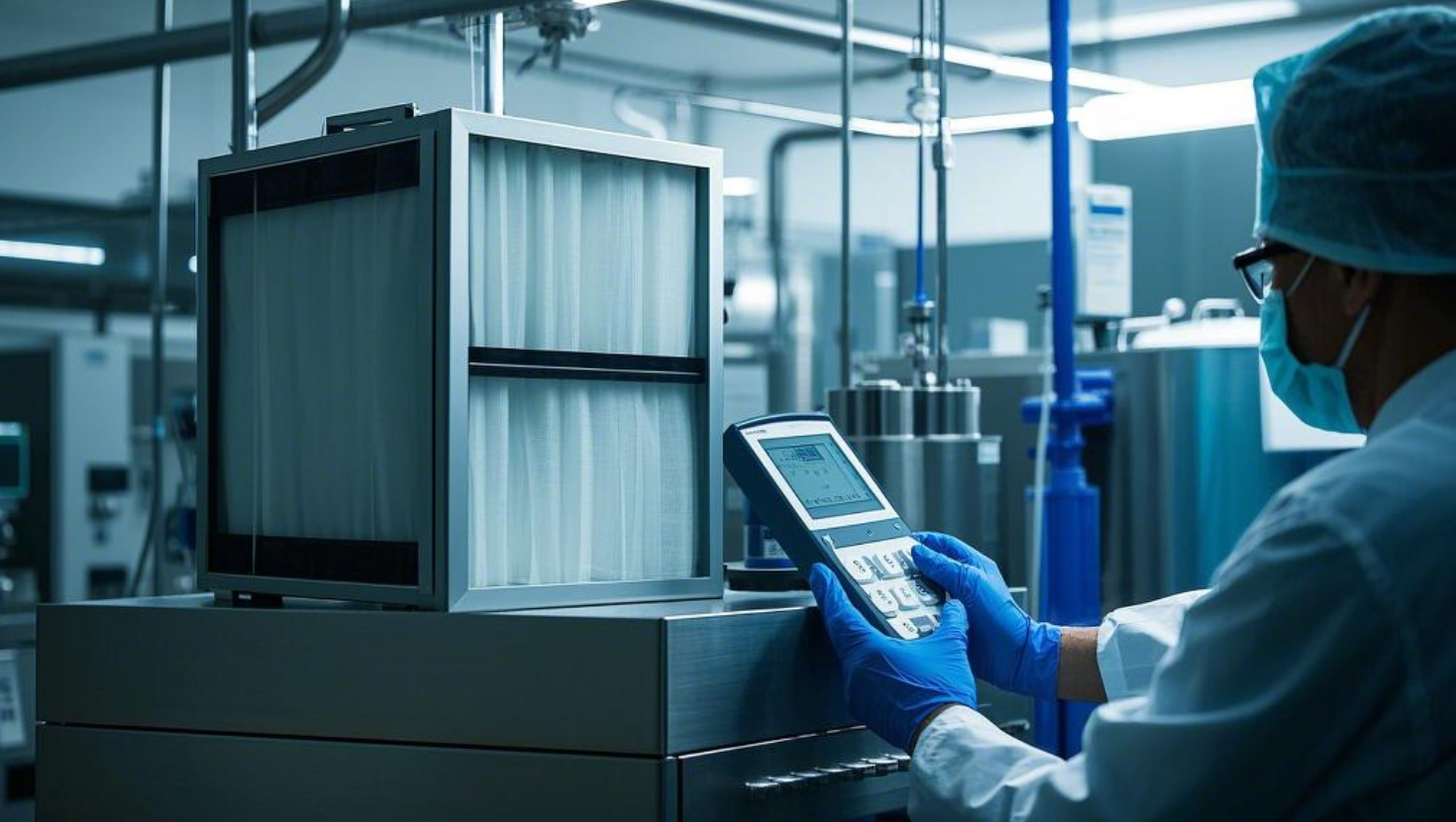
In the pharmaceutical industry, maintaining a sterile and contaminant-free environment is of paramount importance. The production of pharmaceutical products requires stringent control measures to prevent contamination that could compromise product efficacy and patient safety. One critical component in achieving such high levels of cleanliness is the HEPA filter in pharmaceutical industry. These filters are essential in filtering out microscopic particles, including bacteria, viruses, and dust, ensuring that the air within manufacturing facilities meets the strict standards set by regulatory bodies. This article delves into the use of HEPA filters in the pharmaceutical industry, exploring their types, functions, and the vital role they play in upholding product integrity.
The term HEPA stands for High-Efficiency Particulate Air filter. A HEPA filter is designed to trap at least 99.97% of airborne particles that are 0.3 microns in diameter. This level of efficiency is crucial in environments where air purity is critical. The HEPA filter full form emphasizes its capacity to capture a wide range of particle sizes, making it indispensable in industries like pharmaceuticals, healthcare, and microelectronics.
HEPA filters utilize a dense mat of randomly arranged fibers, typically made from fiberglass, to capture particles. The mechanism of filtration involves several processes:
Interception: Particles following a line of flow in the air stream come within one radius of a fiber and adhere to it.
Impaction: Larger particles cannot adjust swiftly enough to the sudden changes in the air stream near the fibers and are forced to embed into them.
Diffusion: Very small particles move erratically (Brownian motion), increasing the likelihood of contact with filter fibers.
These mechanisms ensure that a wide range of particle sizes are effectively captured, which is vital in environments where even the smallest contaminants can cause significant issues.
In pharmaceutical manufacturing, the control of particulate contamination is critical. Contaminants can alter the chemical composition of drugs, lead to the proliferation of microorganisms, and ultimately compromise the safety and efficacy of pharmaceutical products. HEPA filters are integral in achieving the cleanroom conditions required for various stages of pharmaceutical production, including compounding, filling, and packaging.
Regulatory bodies like the FDA and EMA have strict guidelines on air quality in pharmaceutical manufacturing facilities. HEPA filters help companies comply with these regulations by providing the high level of air purification necessary to meet ISO cleanroom classifications. Failure to maintain appropriate air quality can result in product recalls, legal action, and damage to a company's reputation.
HEPA filters protect pharmaceutical products from airborne contaminants that can cause degradation or render medications unsafe. By removing particulates, HEPA filters ensure that drugs are pure, effective, and safe for patient use. This protection extends to both sterile and non-sterile manufacturing environments.
Understanding the different types of HEPA filters is essential for selecting the appropriate filter for specific applications within the pharmaceutical industry. There are several types of HEPA filters, each designed to meet particular requirements.
Standard HEPA filters are the most commonly used and are effective in a variety of settings. They trap particles down to 0.3 microns and are suitable for general cleanroom use. An example is the Without Clapboard HEPA, which offers efficient filtration without the use of separators.
Some pharmaceutical processes involve high-temperature environments. High-temperature resistant HEPA filters, such as the High-Temperature Resistant Air HEPA Filter, are designed to withstand these conditions without compromising filtration efficiency.
Gel seal HEPA filters provide an airtight seal, preventing air bypass that could lead to contamination. The Gel Seal HEPA Filter is ideal for environments where maintaining strict pressure differentials is necessary.
Mini-pleat HEPA filters have a compact design that allows for a larger filtration surface area within a smaller space. This design improves efficiency and reduces energy consumption. The High-Temperature Resistant Mini-Pleat Filter combines this design with high-temperature resistance.
V-Bank filters, such as the HEPA V-Bank Combined Filter, offer high efficiency and low pressure drop. Their design allows for higher air flow rates, making them suitable for large-scale applications.
The question of how many types of HEPA filters are there is essential for selecting the right filter. HEPA filters can be categorized based on their design, efficiency rating, and specific application. The primary categories include:
Grade or Class: HEPA filters are graded according to their efficiency, ranging from H10 to H14, with H14 being the most efficient.
Design: Variations include pleated, panel, and cartridge designs.
Application-Specific: Filters designed for high-temperature environments, chemical resistance, or other specific needs.
Understanding these types ensures that facilities choose filters that meet their specific air quality requirements.
Cleanrooms are classified based on the concentration of airborne particles. HEPA filters are integral to achieving and maintaining these classifications. The Compact Air Filter is one example of a filter used to meet these stringent requirements.
The International Organization for Standardization (ISO) provides classifications from ISO Class 1 to ISO Class 9, with Class 1 being the cleanest. HEPA filters are essential in achieving Classes 5 through 8, which are common in pharmaceutical manufacturing.
Both the FDA and European Union Good Manufacturing Practice (EU GMP) guidelines specify air cleanliness requirements. HEPA filters help facilities comply with these guidelines by controlling particulate levels and preventing microbial contamination.
Proper installation and maintenance are critical to the performance of HEPA filters. Incorrect handling can compromise filter integrity, leading to contamination risks.
- Ensure filters are installed by trained personnel.
- Verify the integrity of the filter and seal during installation.
- Use appropriate gaskets or gel seals to prevent air bypass.
HEPA filters should be regularly tested using methods like aerosol photometry or particle counting to ensure they meet performance standards. Replacement schedules depend on factors such as usage, environment, and manufacturer recommendations.
While HEPA filters are highly effective, several challenges exist in their implementation:
Pressure Drop: High-efficiency filters can cause significant pressure drop, affecting HVAC system performance.
Energy Consumption: Increased energy is required to overcome pressure drop, leading to higher operational costs.
Filter Integrity: Damage during handling or installation can compromise filter performance.
Selecting filters like the Four Cells Compact Air Filter can help mitigate some of these issues by offering a balance between efficiency and airflow.
The use of HEPA filter used in hospitals is another critical application. In healthcare settings, HEPA filters protect patients and staff by reducing the spread of airborne pathogens.
HEPA filters are used in operating rooms, isolation rooms, and other sensitive areas to prevent the transmission of infectious diseases. They are essential in managing airborne infections, such as tuberculosis and COVID-19.
Patients with weakened immune systems are highly susceptible to airborne infections. HEPA filtration ensures that the air they breathe is free from harmful microorganisms, improving patient outcomes.
Technological advancements continue to improve the efficiency and functionality of HEPA filters. Innovations include self-cleaning filters, antimicrobial coatings, and integration with smart building systems for real-time monitoring.
Self-cleaning filters reduce maintenance needs by automatically removing accumulated particles. This innovation extends filter life and ensures consistent performance.
Applying antimicrobial coatings to filters inhibits the growth of microorganisms on the filter surface. This feature is particularly beneficial in preventing biofilm formation and maintaining a sterile environment.
Selecting a reliable HEPA filter supplier is essential for ensuring product quality and compliance with industry standards. Factors to consider include the company's reputation, product range, customization capabilities, and after-sales support.
Fresh Air Filter Co., Ltd. is a high-tech enterprise specializing in the R&D, manufacturing, and sales of air filtration products. Established in 2007, the company has grown into a leading specialist with over 3,000 square meters of manufacturing space, including cleanroom workshops. With a strong focus on innovation, they offer a wide range of products suitable for various applications in the pharmaceutical industry.
In the pharmaceutical industry, the use of HEPA filters is not just a regulatory requirement but a fundamental component of the manufacturing process. By effectively removing airborne particles, HEPA filters ensure the production of safe and effective pharmaceutical products. Understanding the different types of HEPA filters used in pharmaceutical industry enables companies to select the right filters for their specific needs. Advancements in filter technology continue to enhance their efficiency and usability, further safeguarding product integrity and patient health.
For factories, channel merchants, and distributors, partnering with reputable suppliers like Fresh Air Filter Co., Ltd. ensures access to high-quality HEPA filters that meet the stringent demands of the pharmaceutical industry. By investing in the right filtration solutions, stakeholders can contribute to the overall success and reliability of pharmaceutical manufacturing processes.


