


Views: 0 Author: Site Editor Publish Time: 2026-04-03 Origin: Site


Cleanrooms are vital for maintaining air quality in sensitive industries like pharmaceuticals, electronics, and aerospace. They ensure that products remain uncontaminated, which is crucial for their safety and integrity. To achieve this, effective filtration systems, such as ceiling filter media, play a pivotal role.
Ceiling filter media, commonly used in fan filter units (FFUs) mounted on cleanroom ceilings, continuously filters the air entering the room. In this article, we’ll examine whether ceiling filter media is the best choice for cleanrooms, exploring its advantages, limitations, and how it compares to other filtration systems. By the end, you’ll understand if ceiling filter media meets your cleanroom needs.
Ceiling filter media is crucial for maintaining high air quality in cleanrooms by filtering out airborne particles.
It provides uniform air distribution and is space-efficient, ideal for large cleanroom setups.
HEPA and ULPA filters are commonly used in ceiling filter media, offering high-efficiency particle removal.
While it is suitable for various cleanroom applications, maintenance and cost-effectiveness can be challenges, especially in larger facilities.
Fresh Filter products offer robust, reliable ceiling filter solutions, tailored to meet the diverse needs of cleanroom industries.
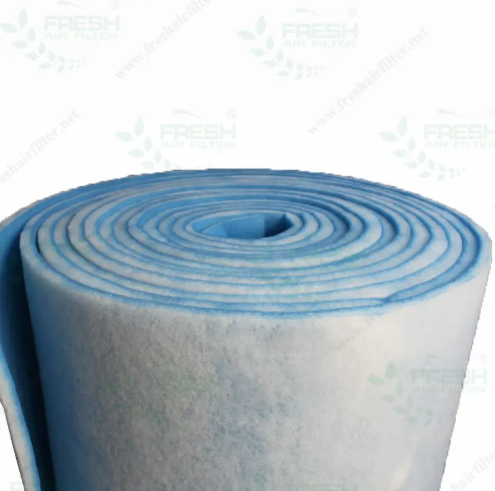
Ceiling filter media refers to the filtration material used in fan filter units (FFUs) that are installed in the ceiling of a cleanroom. These filters can be HEPA (High-Efficiency Particulate Air) or ULPA (Ultra-Low Penetration Air) filters, both designed to capture particles as small as 0.3 microns and 0.12 microns, respectively. These filters are part of FFUs that are positioned in the ceiling plenum to continuously filter the air entering the cleanroom, ensuring a contaminant-free environment.
The key feature of ceiling filter media is its ceiling-mounted design, which allows for uniform distribution of purified air throughout the cleanroom. This design maximizes airflow and ensures that all areas of the cleanroom are covered without the need for bulky floor-mounted systems.
Ceiling filter media is typically made from fiberglass or synthetic materials designed to trap small particles. Two main types of filter media are used:
HEPA Filters: These capture 99.97% of particles larger than 0.3 microns, suitable for less strict cleanroom applications.
ULPA Filters: These capture 99.999% of particles as small as 0.12 microns, ideal for sensitive environments like semiconductor manufacturing.
Ceiling filter media works by drawing in contaminated air, filtering out the particles, and pushing the clean air into the cleanroom environment. This continuous process ensures that the room maintains positive air pressure and is free from harmful contaminants. The FFUs powered by ceiling filter media play a vital role in maintaining a constant flow of filtered air into the cleanroom, preventing contamination and supporting critical operations.
Cleanrooms are classified based on their air cleanliness, which is determined by the number and size of particles allowed in the air. The ISO 14644-1 standard defines cleanroom classifications, which range from ISO Class 1 (the cleanest) to ISO Class 9 (the least clean). These classifications dictate the design, air changes per hour (ACH), and the filtration systems required.
Cleanrooms are categorized as follows:
| ISO Class | Particles per Cubic Meter (0.3 µm) | Air Changes per Hour (ACH) |
|---|---|---|
| Class 1 | 10 | 1000 |
| Class 5 | 3,520 | 100 |
| Class 7 | 352,000 | 60 |
The size of the particles that need to be filtered is crucial. Ceiling filter media, particularly with HEPA or ULPA filters, is effective at trapping particles as small as 0.3 microns, which is standard for most cleanroom applications. The choice of filter media must align with the cleanroom's required classification.
The number of air changes per hour (ACH) and the filtration capacity needed depend on the cleanroom classification. Higher-class cleanrooms (ISO 5 and above) require more frequent air changes and larger filtration capacities. Ceiling filter media helps meet these requirements by providing continuous, efficient filtration.
Filtration systems in cleanrooms are essential for maintaining controlled environments. These systems remove contaminants and ensure that the air meets the cleanliness standards set by the ISO classifications.
The most common filters used in cleanrooms are HEPA and ULPA filters. HEPA filters are suitable for most cleanroom environments, while ULPA filters are used in more sensitive areas that require even greater filtration efficiency.
Proper filtration is essential for maintaining operational integrity in cleanrooms. Whether using ceiling filter media with HEPA or ULPA filters, maintaining optimal filtration ensures that the cleanroom meets industry standards and reduces the risk of contamination.
When selecting a filtration system for cleanrooms, it's essential to compare ceiling filter media with other systems. Here, we evaluate the differences in efficiency, maintenance, and cost.
| Filtration Method | Efficiency | Maintenance | Space Efficiency |
|---|---|---|---|
| Ceiling Filter Media | High (HEPA/ULPA) | Moderate | Excellent |
| Standalone Air Purifiers | Moderate (HEPA) | High | Low |
| Wall-Mounted Filters | High (HEPA/ULPA) | Low | Moderate |
Standalone air purifiers are typically used in smaller spaces, but they do not offer the same uniform air distribution or continuous filtration as ceiling filter media. Ceiling filter media is better suited for large cleanroom environments, where consistent air quality is required.
Wall-mounted filters can be less efficient in larger spaces due to their limited air coverage. Ceiling filter media, however, provides better airflow distribution, ensuring the entire room receives clean, filtered air.
For ISO 5 and ISO 6 cleanrooms, ceiling filter media is highly effective due to its ability to provide continuous airflow and trap smaller particles. In these environments, ULPA filters are often used to meet the stringent particle size requirements.
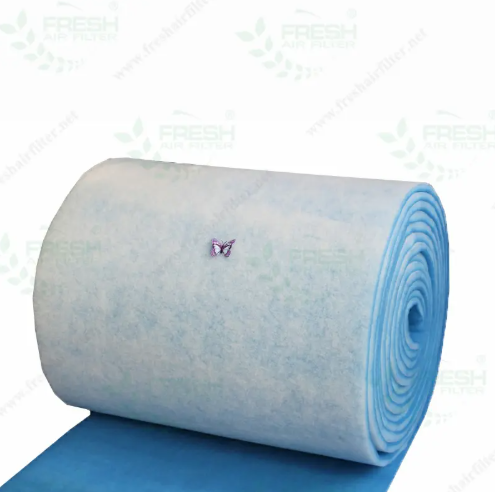
One of the main benefits of ceiling filter media is its ability to free up valuable floor space in the cleanroom. This is especially important in environments where maximizing usable area is critical.
Ceiling filter media helps maintain uniform airflow across the cleanroom by using a plenum system. This system ensures that clean air is distributed evenly, reducing the risk of contamination in corners and hard-to-reach areas.
Ceiling filter media plays a crucial role in maintaining the air quality in cleanrooms by providing continuous air purification. It helps sustain positive air pressure, which is essential for preventing contaminants from entering the cleanroom. By filtering out airborne particles, ceiling filter media ensures that cleanroom standards are consistently met, creating a controlled and contamination-free environment.
Pharmaceutical cleanrooms require stringent contamination control to ensure the safety and integrity of drug production. Ceiling filter media helps maintain the required ISO 7 or ISO 5 classification by providing efficient air filtration.
Semiconductor cleanrooms need to maintain the highest levels of cleanliness. ULPA filters in ceiling filter media are ideal for these environments, as they can trap smaller particles that would otherwise damage sensitive microelectronics.
Aerospace and laboratory cleanrooms also benefit from the uniform air distribution provided by ceiling filter media, which ensures the integrity of research and manufacturing processes.
In highly sensitive environments, the filtration capacity of ceiling filter media may not be sufficient. For these applications, additional filtering methods or ULPA filters may be necessary.
Ceiling filter media can be more expensive than other filtration methods, especially in lower-class cleanrooms. Careful consideration of the cleanroom classification and required performance is needed to ensure cost-effectiveness.
For large cleanrooms, maintenance can be challenging. Replacing filters in ceiling-mounted units may require downtime and special equipment, especially in high-ceiling areas.
Many pharmaceutical manufacturers have successfully implemented ceiling filter media in their ISO 7 and ISO 5 cleanrooms, ensuring consistent air quality and compliance with stringent industry standards.
In the electronics and aerospace industries, ceiling filter media plays a vital role in maintaining the precision and cleanliness required for sensitive manufacturing and research processes.
Ceiling filter media is an effective solution for maintaining cleanroom standards in various industries. It offers uniform air distribution, space-saving design, and high efficiency in removing airborne particles. However, it does have limitations, such as filtration capacity concerns in highly sensitive environments and maintenance challenges for larger facilities. Ceiling filter media is especially suitable for cleanrooms that require continuous air filtration and contamination control. However, in extremely sensitive environments, additional filtration methods may be necessary.
For expert advice or assistance in selecting the right ceiling filter media for your cleanroom, contact Fresh Filter. Their high-performance products are designed to meet the rigorous demands of cleanrooms while ensuring optimal performance and compliance with industry standards.
A: Ceiling filter media is used in fan filter units (FFUs) to filter the air entering cleanrooms. It ensures air quality by removing airborne particles and maintaining a contaminant-free environment.
A: Ceiling filter media helps maintain high air quality by efficiently trapping contaminants, providing uniform air distribution and ensuring compliance with cleanroom standards.
A: Ceiling filter media offers space-saving design and continuous airflow, making it more efficient for large cleanrooms compared to traditional standalone or wall-mounted filters.
A: While Ceiling Filter Media is ideal for most cleanrooms, it may not be sufficient for highly sensitive environments that require stricter filtration, such as semiconductor manufacturing.
A: Ceiling filter media provides high efficiency, low maintenance, and cost-effectiveness while offering consistent airflow and preventing contamination in cleanrooms.
