


Views: 0 Author: Site Editor Publish Time: 2025-08-21 Origin: Site


In the realm of air filtration, the Mini-pleat HEPA Filter has emerged as a pivotal component, offering high efficiency and performance in various applications. These filters are renowned for their ability to capture a significant percentage of airborne particles, ensuring cleaner air in environments ranging from industrial settings to residential spaces. As air quality concerns continue to rise globally, understanding the intricacies of these filters becomes crucial. This article delves into the efficiency and performance of Mini-pleat HEPA Filters, providing insights into their construction, applications, and benefits. For more detailed information on Mini-pleat HEPA Filters, you can explore our Mini-pleat HEPA Filter section.

Mini-pleat HEPA Filters are a type of high-efficiency particulate air filter designed to capture at least 99.97% of particles as small as 0.3 microns. The term "mini-pleat" refers to the compact, folded structure of the filter media, which maximizes surface area and enhances filtration efficiency. This design allows for a greater volume of air to pass through the filter while maintaining high levels of particle capture. For similar high-performance filtration needs, check out our Mini-Pleat HEPA Filter, which provides enhanced filtration with minimal airflow resistance.
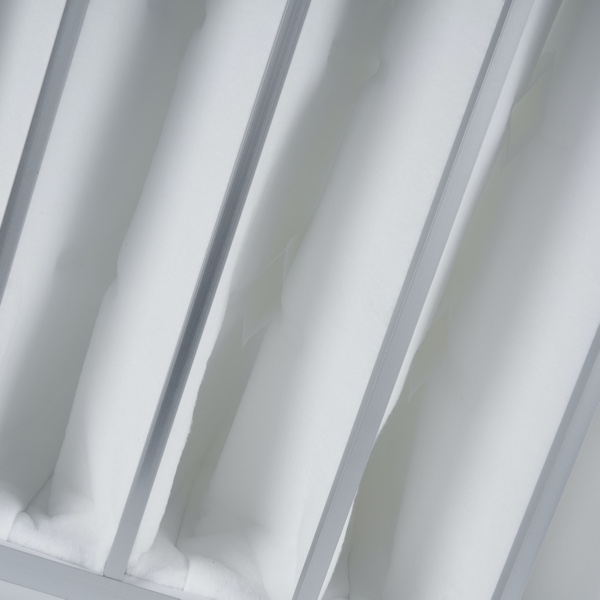
The construction of Mini-pleat HEPA Filters involves the use of high-quality materials such as fiberglass or nonwoven fabric. Fiberglass, also known as glass fiber, is commonly used due to its high filter efficiencies, although it tends to have a higher pressure drop. Nonwoven fabric materials, typically polypropylene, are also popular as they offer a lower pressure drop while maintaining high performance. The pleated design increases the surface area of the filter media, allowing for more efficient particle capture.
Mini-pleat HEPA Filters are designed to capture a wide range of particle sizes through various mechanisms such as diffusion, interception, and impaction. The most penetrating particle size (MPPS) is typically in the range of 0.04 to 0.17 microns, where the filter has the lowest efficiency. However, performance improves for particles both larger and smaller than this range. The efficiency of these filters is often measured at 0.3 microns, the size at which they must capture at least 99.97% of particles to meet HEPA standards. Our Mini-Pleat HEPA Filter is specifically designed to achieve high efficiency at a 0.3-micron particle size, ensuring top-tier air purification in demanding environments.
Pressure drop, or airflow resistance, is a critical factor in the performance of Mini-pleat HEPA Filters. A lower pressure drop indicates less resistance to airflow, which is desirable as it allows for more efficient air movement through the filter. The pleated design of these filters helps to balance high filtration efficiency with acceptable pressure drop levels, ensuring optimal performance in various applications. Our Mini-Pleat HEPA Filter utilizes advanced pleating techniques to minimize pressure drop while maximizing particle capture, offering both energy savings and high air quality.
Mini-pleat HEPA Filters are widely used in industrial and commercial settings where air quality is of utmost importance. Industries such as semiconductor manufacturing, pharmaceutical production, and biotechnology rely on these filters to maintain cleanroom environments and ensure product integrity. The filters are also used in HVAC systems to improve indoor air quality in commercial buildings.
In residential settings, Mini-pleat HEPA Filters are used in air purifiers and HVAC systems to reduce allergens, dust, and other airborne particles. They are particularly beneficial for individuals with allergies or respiratory conditions, as they help to create a cleaner and healthier indoor environment. The Mini-Pleat HEPA Filter is also a great choice for homeowners seeking superior air quality, especially for those sensitive to airborne irritants.
Benefits of Mini-pleat HEPA Filters
The primary benefit of Mini-pleat HEPA Filters is their ability to significantly improve air quality by capturing a wide range of airborne particles. This leads to a reduction in allergens, pollutants, and other contaminants, creating a healthier environment for occupants.
The design of Mini-pleat HEPA Filters allows for efficient airflow with minimal resistance, which can lead to energy savings in HVAC systems. By maintaining high filtration efficiency with a lower pressure drop, these filters help to reduce the energy consumption of air handling units.
Mini-pleat HEPA Filters play a crucial role in maintaining air quality across various environments. Their high efficiency and performance make them an ideal choice for applications ranging from industrial cleanrooms to residential air purifiers. By understanding the construction, efficiency, and benefits of these filters, individuals and organizations can make informed decisions to enhance air quality and promote healthier living and working conditions. For further details on air filters, you can visit our Air Filters section.
1. What is the primary function of Mini-pleat HEPA Filters?
Mini-pleat HEPA Filters are designed to capture at least 99.97% of airborne particles as small as 0.3 microns, improving air quality in various environments.
2. How do Mini-pleat HEPA Filters differ from standard HEPA filters?
The mini-pleat design increases the surface area of the filter media, allowing for more efficient particle capture and reduced pressure drop compared to standard HEPA filters.
3. In which industries are Mini-pleat HEPA Filters commonly used?
These filters are widely used in industries such as semiconductor manufacturing, pharmaceutical production, and biotechnology, where maintaining cleanroom environments is critical.
4. Can Mini-pleat HEPA Filters be used in residential settings?
Yes, they are commonly used in residential air purifiers and HVAC systems to reduce allergens and improve indoor air quality.
5. What materials are used in the construction of Mini-pleat HEPA Filters?
These filters are typically made from high-quality materials such as fiberglass or nonwoven fabric, which offer high filtration efficiency and low pressure drop.
6. How does the pressure drop affect the performance of Mini-pleat HEPA Filters?
A lower pressure drop indicates less resistance to airflow, allowing for more efficient air movement through the filter and reducing energy consumption.
7. Why is filtration efficiency measured at 0.3 microns?
The 0.3-micron size is considered the most challenging for filters to capture, and meeting the 99.97% efficiency standard at this size ensures high performance across a range of particle sizes.


