


Views: 0 Author: Site Editor Publish Time: 2026-09-01 Origin: Site


Commercial facilities face compounding pressures to meet stringent Indoor Air Quality (IAQ) standards while simultaneously reducing energy consumption and operational overhead. Standardizing on legacy filtration media often forces a compromise between particle capture efficiency and aerodynamic performance. This dynamic leads to excessive pressure drop, increased fan motor strain, and inflated energy costs across the facility. Specifying a high-performance nonwoven pocket filter shifts this paradigm entirely. By leveraging extended surface areas and advanced synthetic media, facility managers achieve required filtration grades while optimizing lifecycle energy expenditure for commercial and industrial HVAC systems. Upgrading your filtration strategy requires understanding media mechanics, evaluating efficiency grades, and implementing precise installation protocols.
The structural design of a nonwoven pocket filter maximizes dust-holding capacity and minimizes airflow resistance, directly reducing HVAC energy expenditure.
Selecting between an F8 nonwoven pocket filter and an F9 nonwoven pocket filter requires aligning the media’s particle capture efficiency with specific facility requirements (e.g., general commercial, industrial manufacturing, or pre-cleanroom).
Filter evaluation must prioritize sustained operational pressure drop over initial purchase price, as fan energy accounts for the majority of a filter's lifecycle cost.
Successful implementation relies on mitigating physical risks, such as pocket sagging, air bypass, and moisture degradation, through proper installation and structural support.
Commercial air filtration operates under strict regulatory and health-driven requirements. Facility managers must align their air handling systems with established global frameworks. These include ASHRAE Standard 52.2 in North America and ISO 16890 internationally. Legacy standards like EN779 still influence procurement decisions and facility specifications in many regions. These baselines dictate how effectively a filter removes particulate matter from the airstream. They focus heavily on PM1, PM2.5, and PM10 categories. PM1 particles pose the highest health risk because they penetrate deep into the human respiratory system and enter the bloodstream. Capturing these sub-micron contaminants requires highly dense filtration media.
This requirement creates an inherent mechanical conflict known as the energy versus filtration paradox. Trapping sub-micron particles demands tight, restrictive fiber networks. These dense networks naturally restrict airflow. Restricted airflow increases static pressure resistance within the Air Handling Unit (AHU). When resistance rises, the HVAC fan motor must work significantly harder to push the required volume of air through the dense media. Variable Frequency Drives (VFDs) detect this resistance and ramp up the fan speed to compensate. This extra mechanical work draws more electrical current, overworks the fan motors, accelerates mechanical wear on belts and bearings, and spikes kilowatt-hour (kWh) consumption. You cannot simply install a denser filter without severely impacting system aerodynamics.
Evaluating filter performance requires a comprehensive operational framework. The initial purchase price of a filter represents only a tiny fraction of its actual financial burden on a facility. Energy consumption drives the vast majority of the expense. This energy use correlates directly with the filter's pressure drop over its operational lifespan. Labor for frequent replacements adds to the operational load, pulling maintenance staff away from other critical tasks. Disposal fees for saturated filters further increase the budget impact. A successful filtration strategy minimizes airflow resistance while maintaining the target capture efficiency, ensuring the facility meets IAQ standards without inflating utility bills.
Legacy Standard (EN779) | Global Standard (ISO 16890) | North American Standard (ASHRAE 52.2) | Target Particulate Size |
|---|---|---|---|
M6 | ePM10 > 60% | MERV 11 - 12 | Coarse dust, large pollen, spores |
F7 | ePM2.5 > 65% | MERV 13 | Fine dust, pet dander, auto emissions |
F8 | ePM1 60-70% | MERV 14 | Bacteria, droplet nuclei, smoke |
F9 | ePM1 > 80% | MERV 15 | Sub-micron particles, smog, fine smoke |
The material science behind synthetic media drives its superior performance in commercial environments. Manufacturers utilize meltblown polypropylene (PP) and micro-fiberglass nonwovens to construct these filters. The meltblown process extrudes molten polymer through microscopic nozzles into a high-velocity airstream. This air stretches the polymers into ultra-fine filaments, which cool and form a randomized, continuous fiber web. This complex structure traps dust, pollen, and industrial particulates mechanically. It relies on three primary filtration principles: interception, inertial impaction, and diffusion. Some legacy filters depend heavily on temporary electrostatic charges applied during manufacturing. These charges dissipate rapidly as the filter loads with dirt or encounters high humidity. Mechanical nonwoven media maintains consistent, reliable capture efficiency throughout its entire service life.
Manufacturers engineer specific performance profiles through advanced media blending. They combine different synthetic materials to create gradient density structures within the pocket walls. The outer layers feature coarser, more open fibers designed to capture large particles like lint, hair, and heavy dust. The inner layers utilize ultra-fine meltblown fibers to trap sub-micron contaminants. This adaptability allows for highly customized filtration. It delivers high efficiency and low pressure drop simultaneously. Gradient density prevents the surface of the filter from blinding over quickly, allowing air to penetrate deeper into the media matrix.
The aerodynamic design of the pocket configuration offers massive advantages over traditional flat panel filters. Flat panel filters limit the active surface area to the exact dimensions of the holding frame. Pocket filters utilize V-shaped or U-shaped bags extending deep into the AHU chamber. This geometry drastically increases the active filtration surface area. It often provides five to ten times more media than a standard flat panel. Increased surface area lowers the air velocity passing through the material. Lower media velocity reduces airflow resistance and significantly improves particle capture efficiency.
Depth filtration in nonwoven materials enhances Dust Holding Capacity (DHC). Particles penetrate the media matrix rather than accumulating solely on the surface. This uniform particulate loading prevents premature face-loading. Face-loading occurs when a solid cake of dust blocks airflow entirely, causing a sudden and severe spike in pressure drop. High DHC extends the operational lifespan of the filter. It delays the point where the filter reaches its terminal pressure drop, reducing maintenance frequency and material waste.
Extended Surface Area: Deep pockets multiply the available media, dropping face velocity and reducing static pressure.
V-Shaped Geometry: Tapered pockets prevent dead zones and ensure uniform air distribution across the entire filter bank.
Delayed Terminal Pressure Drop: Gradient density allows for deep particulate loading, extending the time between required filter changes.
Structural Rigidity: Internal spacers keep pockets inflated, preventing them from collapsing and blinding off active filtration zones.
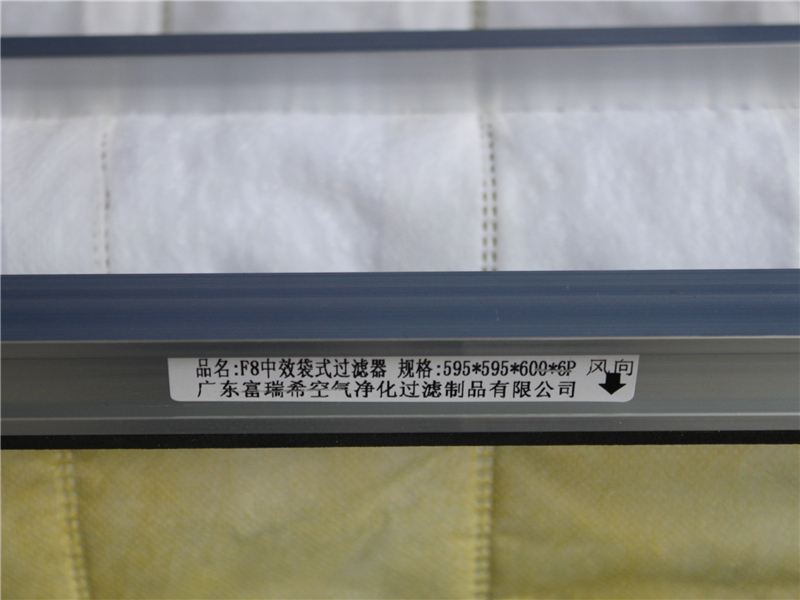
The F8 nonwoven pocket filter provides a robust balance of high-level efficiency and manageable airflow. It typically aligns with MERV 14 or ePM1 60-70% equivalent ratings under modern testing standards. This specific profile captures a significant percentage of fine particulates, including bacteria, droplet nuclei, and fine smoke. Despite its high capture rate, the F8 grade maintains a relatively low baseline pressure drop. The engineered media structure allows HVAC fans to operate efficiently without drawing excessive electrical current, making it a highly versatile choice for large-scale facilities.
This grade suits a wide range of demanding commercial applications. Optimal use cases include high-rise commercial office buildings, large retail complexes, and educational institutions. Light industrial facilities benefit heavily from its high dust-holding capacity, which handles moderate particulate loads without clogging prematurely. General hospital areas, waiting rooms, and outpatient clinics use F8 filters to maintain high IAQ and protect vulnerable patients. It delivers excellent air purity without requiring the extreme airflow restrictions associated with cleanroom-grade HEPA filtration.
The F9 nonwoven pocket filter represents the upper tier of secondary HVAC filtration. It typically achieves MERV 15 or ePM1 80%+ equivalent capture efficiency. This grade targets the absolute smallest sub-micron particles, including fine combustion exhaust, atmospheric smog, and microscopic metallic dust. Because the fiber matrix is significantly denser to achieve this capture rate, the increased density does impact airflow resistance. Facility managers must account for a higher initial and operational pressure drop when specifying this grade, ensuring their AHU fans have the brake horsepower to handle the resistance.
Rigorous environments demand F9 performance to maintain safety and compliance. Ideal applications include pharmaceutical manufacturing pre-filtration, where protecting terminal HEPA filters is critical to maintaining cleanroom integrity. Specialized healthcare facilities, burn units, and surgical suite makeup air systems rely on this efficiency to prevent hospital-acquired infections. Commercial buildings located in high-pollution urban environments or near industrial zones also require F9 filters to scrub heavy smog, diesel exhaust, and volatile organic compounds from incoming outside air.
Filter Grade | ISO 16890 Equivalent | Initial Resistance (Typical) | Primary Target Contaminants | Ideal Facility Application |
|---|---|---|---|---|
F8 Nonwoven Pocket | ePM1 60% - 70% | Moderate (approx. 100-120 Pa) | Fine dust, bacteria, smoke | Commercial offices, retail, general healthcare |
F9 Nonwoven Pocket | ePM1 > 80% | High (approx. 130-160 Pa) | Sub-micron smog, exhaust, fine powders | Pharma pre-filtration, surgical suites, urban high-rises |
Nonwoven synthetic media maintains stable performance across severe environmental cycles. Temperature fluctuations and high relative humidity compromise certain natural fibers and blended cellulose media. Natural materials absorb moisture from the airstream, causing the fibers to swell. This swelling chokes off airflow, spikes pressure drop, and forces the VFD to ramp up fan speed. Heavily electrostatically charged media also loses efficiency rapidly in damp conditions as the water vapor grounds the static charge. Synthetic nonwovens are inherently hydrophobic. They resist moisture absorption entirely. They deliver consistent filtration efficiency and stable pressure drop regardless of weather changes, seasonal humidity shifts, or coastal fog.
Structural integrity prevents media collapse under variable aerodynamic loads. HVAC systems frequently modulate airflow based on building occupancy and temperature demands. This constant modulation stresses the filter structure, causing inferior pockets to flutter and tear. Premium pocket filters utilize internal aerodynamic spacers. These spacers prevent the individual pockets from inflating excessively and touching each other. If pockets touch, they blind off valuable surface area, forcing air through a smaller section of media and increasing velocity. Sonic welding replaces traditional needle stitching in high-end filters. It creates seamless, leak-proof joints that eliminate bypass holes. Rigid header frames made of galvanized steel, extruded aluminum, or high-impact plastic anchor the pockets securely, maintaining the pocket shape against strong, turbulent air currents.
Scalability ensures compatibility with existing HVAC frameworks. Facilities rarely have the capital budget to replace entire air handlers just to upgrade their filtration efficiency. Nonwoven pocket filters fit seamlessly into standard holding frames. Common dimensions include 24x24, 12x24, and 20x24 inches. This standardized sizing allows for immediate, drop-in retrofits. Facilities can upgrade system efficiency simply by swapping out legacy flat panels or low-efficiency bags for high-performance synthetic pockets. They achieve better IAQ and lower energy use without requiring capital-intensive equipment modifications or extended system downtime.
Evaluating filters requires analyzing initial procurement cost against long-term energy expenditure. A premium synthetic pocket filter carries a higher upfront purchase price than a basic fiberglass or cotton-blend alternative. However, its aerodynamic design and gradient density media keep the operational pressure drop exceptionally low. This reduction in static pressure saves significant kilowatt-hours (kWh) over a 6-to-12-month operational cycle. The electrical energy savings consistently outweigh the initial purchase premium by a wide margin. This dynamic yields a net positive return on investment for the facility, freeing up operational budget for other maintenance priorities.
Comparing synthetic nonwovens to traditional fiberglass media reveals stark operational and safety differences. Legacy fiberglass pocket filters shed micro-glass fibers into the airstream as they degrade. These fibers pose severe respiratory risks to building occupants and contaminate sensitive manufacturing processes. Fiberglass also breaks easily during installation, causing skin irritation for maintenance personnel. Synthetic nonwovens offer superior durability and safety. They are constructed from continuous filaments that do not shed. They remain clean, intact, and safe for maintenance personnel to handle. This durability prevents accidental media tearing during routine filter changes, ensuring no dirty air bypasses the system.
Facility managers must navigate physical space constraints versus optimal filter depth. Deeper pockets offer better aerodynamics and longer lifespans. A 36-inch deep pocket holds significantly more dust and operates at a lower pressure drop than a 21-inch pocket. However, the Air Handling Unit must have the physical internal depth to accommodate it. Inserting a deep filter into a shallow AHU causes the pockets to bunch up against the cooling coils or the back wall of the chamber. This bunching destroys the aerodynamic advantage, blinds off media, and creates turbulent airflow. You must physically measure the internal clearance of the filter bank before specifying pocket depth.
Procurement strategy heavily influences lifecycle efficiency and system performance. Purchasing standard off-the-shelf filters works for basic, modern setups. Working directly with wholesale manufacturers offers distinct advantages for large-scale deployments or older buildings. Source factories provide custom pocket lengths tailored to exact AHU dimensions. They manufacture specialized header frame sizes for legacy or custom-built air handlers. Direct sourcing ensures exact fitment. It eliminates air bypass issues caused by forcing standard filters into non-standard racks, ensuring 100% of the air passes through the media.
Improper installation guarantees poor performance, regardless of the filter's quality. Preventing pocket sagging and air bypass remains the top priority during maintenance routines. You must install pocket filters with the pockets aligned vertically. Horizontal installation causes the pockets to sag under their own weight and the pressure of the airflow. They collapse onto each other, blocking airflow and rendering the bottom half of the filter useless. Ensure proper, high-quality neoprene or polyurethane gasket seals exist between the filter header and the holding frame. Missing or degraded gaskets allow dirty air to bypass the filter entirely, contaminating the coils and the building interior. Utilize filters featuring aerodynamic stitching or internal spacers to force the pockets to remain open and fully utilize their surface area.
Managing moisture requires specific material choices and vigilant maintenance. High-humidity environments pose severe risks to HVAC systems. Damp conditions promote rapid microbial growth on organic media or blended cellulose filters. They weaken the structural integrity of inferior filters, causing them to blow out under pressure. Mitigate this risk by specifying hydrophobic synthetic nonwovens. These materials repel water naturally. They prevent mold colonization and maintain their tensile strength even in coastal applications, tropical climates, or industrial wash-down areas. Regular inspection of the AHU drain pans also prevents standing water from wicking up into the bottom of the filter media.
Establishing evidence-based replacement schedules optimizes filter usage and prevents energy waste. Calendar-based replacements lead to massive inefficiency. Changing filters every three months regardless of their actual condition discards perfectly usable media. Conversely, leaving them in too long wastes massive amounts of fan energy as the VFD fights the clogged media. Advocate for condition-based monitoring. Install digital differential pressure sensors or Magnehelic gauges across every filter bank. Monitor the resistance continuously. Replace the filters exactly when they reach their optimal terminal pressure drop as specified by the manufacturer. This strategy maximizes the filter's lifespan, minimizes material waste, and prevents unnecessary energy expenditure.
Audit current air handling unit capacities to determine maximum allowable filter depth and physical clearance before procurement.
Install differential pressure sensors across all filter banks to transition from calendar-based to condition-based replacement schedules.
Request technical data sheets from manufacturers to verify synthetic media composition, gradient density, and hydrophobic properties.
Initiate a single-unit pilot test to measure baseline pressure drop improvements and project annual energy savings across the facility.
A: An F8 filter typically achieves a MERV 14 or ePM1 60-70% equivalent rating, balancing high capture efficiency with lower airflow resistance. An F9 filter provides a MERV 15 or ePM1 80%+ rating, capturing smaller sub-micron particles but operating at a slightly higher baseline pressure drop, requiring more fan power.
A: The V-shaped or U-shaped pocket design drastically increases the active filtration surface area. This expanded area lowers the air velocity passing through the media. Lower velocity reduces airflow resistance, allowing the HVAC fan motor to move the required volume of air while drawing significantly less electrical current.
A: Yes. Premium synthetic nonwoven media is inherently hydrophobic. It repels moisture and does not swell or lose structural integrity in damp conditions. This ensures stable pressure drop and prevents microbial growth, unlike natural fibers or heavily electrostatically charged media which degrade rapidly when wet.
A: Lifespan varies based on particulate loading, outside air quality, and pocket depth. In standard commercial environments, they typically last between 6 to 12 months. Facilities should use differential pressure sensors to determine the exact replacement time based on airflow resistance rather than relying on arbitrary calendar dates.
A: Always install the filters with the pockets aligned vertically. Utilize filters manufactured with internal aerodynamic spacers or sonic welding. These structural features keep the individual pockets separated and inflated, preventing them from touching, sagging, and blinding off active surface area under variable airflow.
A: Yes. Nonwoven pocket filters with rigid header frames and internal spacers are highly compatible with VAV systems. The structural reinforcements prevent the pockets from collapsing, tearing, or fluttering when the HVAC system modulates airflow and changes air velocity based on building demand.
