


Views: 0 Author: Site Editor Publish Time: 2026-09-08 Origin: Site


Inadequate overspray management in industrial finishing drives up operational costs through premature exhaust fan wear, environmental compliance risks, and costly surface defects. The core problem in dry spray booths is a persistent physical trade-off. Facility operators need high paint particulate retention to protect exhaust systems. However, aggressive filtration often causes rapid face-loading. This phenomenon spikes airflow resistance, halts production lines, and ruins the laminar downdraft required for a flawless finish.
Engineered Paint Mist Filter Paper directly addresses this bottleneck. It effectively decouples particulate holding capacity from wind resistance. We will evaluate the technical viability of multi-layer filtration media for automotive, furniture, hardware, and varnish finishing lines. Progressive density structures maintain stable booth pressure while maximizing overspray capture, ensuring continuous operation without sacrificing finish quality.
Progressive Filtration: Multi-layer structures utilize progressive density to capture overspray throughout the depth of the media, preventing surface sealing and extending maintenance intervals.
Airflow Stability: Engineered paper layers maintain low wind resistance even as they load with paint, ensuring consistent booth downdraft and minimizing finish defects.
Holistic System Compatibility: Seamlessly retrofits into standard dry booth configurations, acting as the critical exhaust barrier that protects secondary pocket filters and exhaust stacks. Proper sizing for the specific paint booth filter box is critical to prevent air bypass.
Risk Mitigation: While highly efficient for solvent, varnish, and powder applications, implementation requires careful assessment of booth humidity levels and proper disposal protocols for combustible loaded media.
Standard filtration media relies on a single, uniform barrier to trap particles. This approach fails quickly in high-volume paint applications. Multi-layer grid designs utilize a progressively built architecture of absorbent kraft paper. Manufacturers construct these filters using four to eight distinct layers of paper, depending on the required capacity. They slit and expand each layer to create a specific geometric mesh pattern. The mesh sizing intentionally decreases from the air-entry side to the air-exit side. The front layers feature wide, open diamond grids. The rear layers feature tight, dense grids.
This 3D structure forces continuous directional changes in the exhaust airflow. As paint-laden air travels through the media, it cannot move in a straight line. The design leverages inertial impaction. Heavy, wet paint droplets carry too much momentum to navigate the sharp turns in the airflow path. They crash into the wide front grids and adhere to the absorbent paper. Finer, lighter mist travels deeper into the filter before colliding with the tighter rear grids. This depth-loading mechanism ensures the entire volume of the filter traps paint, rather than just the front surface.
Low wind resistance remains the most important performance metric for any dry spray booth filter. Flat media blocks airflow almost immediately as paint seals its surface. When you use a standard flat pad, the open area drops from 90% to 10% in a matter of hours. The exhaust fan pulls harder against the restriction, causing the pressure drop to spike. Multi-layer paper prevents this through its open-grid entry layers. The air easily bypasses the initial captured droplets. The pressure drop across the filter bank remains remarkably stable even as the media loads with heavy particulate matter.
Maintaining a stable pressure drop directly impacts the quality of the paint finish. Spray booths rely on a consistent, laminar downdraft or crossdraft to pull overspray away from the substrate. A standard automotive booth requires an air velocity of about 100 feet per minute (FPM) at the filter face. If the exhaust filter clogs rapidly, booth pressure increases and velocity drops. This creates turbulent eddy currents. Paint mist swirls back onto the wet product, causing nibs, dry spray, and uneven coating thickness. A stable pressure drop guarantees predictable airflow dynamics, protecting the finish from airborne contamination.
A high-performance spray booth operates as a complete ecosystem. It relies on intake filters, ceiling diffusion media, and exhaust stages working in harmony. The multi-layer grid paint mist filter serves as the primary exhaust interceptor. It sits directly behind the spraying area, acting as the first line of defense for the exhaust plenum. Its job is to capture the vast majority of the wet, sticky overspray before it travels further down the ductwork.
By acting as a highly efficient primary barrier, this media protects the rest of the system. Secondary pocket filters or HEPA stages located downstream cannot handle wet paint. They will blind over in hours if exposed to raw overspray. The multi-layer paper absorbs the heavy particulate load, allowing only dry, microscopic dust to reach the secondary filters. This architectural hierarchy prevents premature fouling of the exhaust fan blades. An out-of-balance fan vibrates violently, destroys motor bearings, and requires extensive downtime to repair.
Fiberglass has long served as a default exhaust filter in many industrial booths. However, multi-layer paper offers distinct operational advantages. Fiberglass relies on a dense mat of spun glass fibers. While it has a high initial holding capacity, it compresses under heavy airflow. As it loads with paint, the fan's negative pressure flattens the mat. The fibers squeeze together, causing a rapid and unpredictable escalation in pressure drop. Multi-layer paper maintains its rigid 3D structure, offering a much slower and more predictable pressure drop curve.
Occupational health and handling present another major difference. Fiberglass sheds microscopic glass shards during installation and removal. Operators must wear extensive personal protective equipment to prevent skin irritation and respiratory issues. Paper media handles cleanly. It cuts easily with a utility knife without shedding hazardous fibers. In high-volume spraying environments, the maintenance intervals heavily favor multi-layer paper. You spend less time shutting down the line to swap out loaded media.
Pleated cardboard filters, often called baffle or Andreae filters, use a different mechanism. They force air through offset holes in two layers of stiff cardboard. This creates extreme inertial separation. Heavy particles hit the cardboard walls and drain down into the V-shaped pockets. This makes pleated cardboard excellent for very heavy, wet coatings like high-solid enamels, epoxies, or tar-based paints.
However, pleated cardboard lacks the absorbent, progressive capture of multi-layer paper. Fine atomized mists, such as clear coats or thin wood stains, often bounce through the offset holes and escape into the exhaust stack. For optimal results, many facilities combine both technologies. Pleated cardboard serves as a rugged pre-filter to catch the heaviest sludge. Multi-layer paper acts as the secondary high-efficiency stage to absorb the fine mist. This combination maximizes holding capacity while ensuring absolute protection for the exhaust fan.
Filter Type | Primary Capture Mechanism | Airflow Stability | Best Use Case |
|---|---|---|---|
Multi-Layer Paper | Progressive density & absorption | Excellent (slow pressure drop) | Varnishes, clear coats, fine atomized mists |
Fiberglass Mat | Depth loading via fiber density | Poor (compresses and mats quickly) | Low-volume, general-purpose spraying |
Pleated Cardboard | Inertial separation & baffle deflection | Good (maintains open holes) | Heavy, high-solid, sticky coatings |
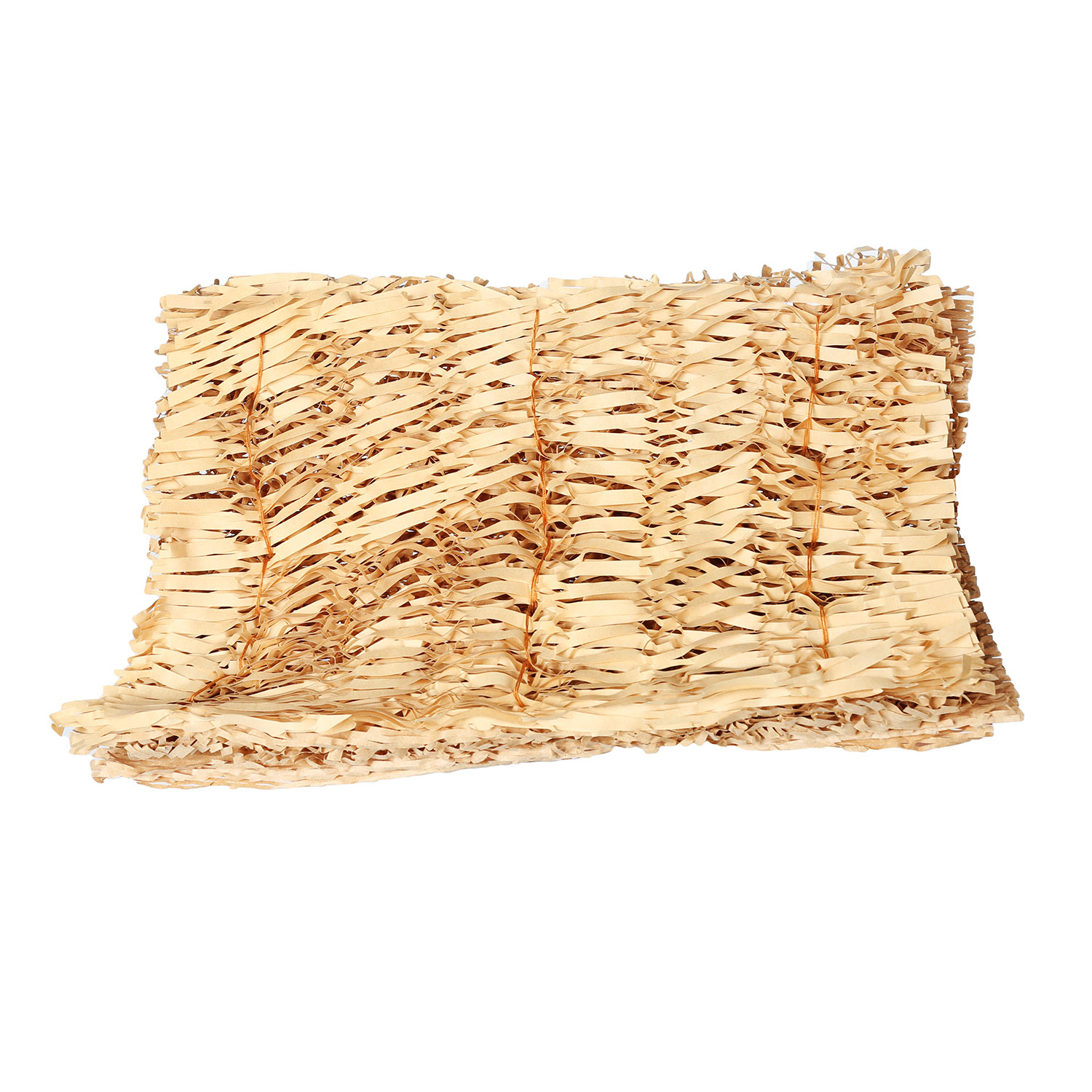
Selecting the right procurement format impacts daily operations and maintenance labor. Industrial multi-layer paint filter paper is typically available in bulk rolls or pre-cut panels. Bulk rolls offer high customization. They suit continuous spray lines where filter racks span long, uninterrupted horizontal or vertical sections. Maintenance teams simply unroll the media, stretch it across the plenum, and cut it to the exact length required.
Facility managers must calculate waste and labor costs carefully. Cutting rolls to fit custom filter slots takes time. If the cuts are imprecise, gaps occur. Pre-cut panels eliminate this labor. They drop directly into standardized frames. The convenience and guaranteed fit often offset the initial material expense in fast-paced production environments. Evaluate your specific rack dimensions and the frequency of changeouts before committing to a format.
Upgrading to multi-layer paper requires accurate measurement of existing infrastructure. Measure the internal dimensions of the filter slots and racks. The media must sit flush against the support grid. If the rack is too deep, the paper may bow backward under exhaust pressure. If the rack is too shallow, the media will protrude and interfere with booth operations.
Structural rigidity in the filter frame is non-negotiable. High-capacity exhaust fans generate immense negative pressure. If the support grid behind the paper is weak or widely spaced, the media will collapse. A collapsed filter instantly creates a massive air bypass. Weld additional support rods or heavy-gauge wire mesh into the rack if the span exceeds 24 inches. The frame must support the media fully, especially when it becomes heavy with accumulated paint sludge.
Installation precision dictates filtration success. Securing the filter edges within the paint booth filter box is mandatory. Air always takes the path of least resistance. If a half-inch gap exists between the filter edge and the metal frame, contaminated air will rush through it. This bypass defeats the entire purpose of the filtration system.
Implement strict installation practices to lock the media in place. Follow these steps for a secure fit:
Shut down the exhaust fan and lock out the power to the booth.
Remove the old media and scrape the metal tracks clean of dried overspray.
Measure the vertical and horizontal span of the filter bank.
Cut the paper roll to length, adding a two-inch overlap for sealing against the frame.
Press the media into the track, ensuring the large diamond face points toward the spraying area.
Lock the edges with spring clips, magnetic strips, or channel locks every 12 inches.
Holding capacity defines the exact mass of paint particulate a filter can trap before reaching its terminal pressure drop. Manufacturers typically measure this in kilograms per square meter (kg/m²). Multi-layer grid designs boast exceptionally high holding capacities because they utilize their entire depth, not just the surface. A high-quality paper filter can hold between 15 and 25 kg/m² depending on the paint chemistry.
Higher holding capacity directly translates to reduced booth downtime. Every filter changeout requires stopping the production line, removing the loaded media, cleaning the racks, and installing new filters. By extending the time between changeouts, facilities maximize spraying hours. This reduction in maintenance frequency lowers direct labor costs and increases overall factory throughput. You spend more time painting and less time cleaning.
Filtration efficiency measures the percentage of particulate matter successfully captured by the media. High-quality multi-layer paper achieves arrestance ratings between 95% and 99%, depending on the specific coating and atomization pressure. This high capture rate is vital for maintaining a clean spray booth environment and protecting downstream equipment from fouling.
These metrics directly support compliance with strict environmental regulations. Local authorities mandate strict limits on exhaust emissions. Discharging raw paint mist into the atmosphere results in heavy fines and facility shutdowns. High-efficiency paper media ensures that the exhaust stack remains clean, mitigating legal risks and protecting the surrounding community from airborne heavy metals and solid particulates.
Low initial pressure drop is a technical feature that drives a primary operational goal: zero-defect manufacturing. When a filter allows air to pass freely, the exhaust fan does not have to work as hard. The booth maintains a steady, uniform downdraft. This stable extraction pulls overspray straight down and away from the freshly painted parts.
If wind resistance spikes, the extraction slows down. Paint mist lingers in the air. It eventually settles back onto the wet substrate, creating a rough, gritty texture. This requires costly sanding, buffing, or complete recoating. By maintaining low wind resistance throughout its lifespan, multi-layer paper ensures stable exhaust extraction, directly safeguarding the quality and consistency of the final finish.
Paper-based media possesses inherent vulnerabilities in high-humidity environments. Standard kraft paper absorbs moisture from the air. In facilities without climate control, high ambient humidity can weaken the structural integrity of the filter. Extensive use of water-based paints that do not flash off quickly can saturate the paper, causing it to sag or tear under airflow pressure.
Facilities must deploy mitigation strategies. Implement humidity control systems within the spray booth makeup air unit. Keep relative humidity within the paint manufacturer's specified range. If environmental controls are not feasible, or if the water-based coating load is exceptionally high, consider specialized moisture-resistant treated paper. In extreme cases, synthetic polyester blends may be required to maintain structural integrity.
Storing paint-loaded paper filters presents severe safety risks. Certain catalyzed coatings, varnishes, and high-solid enamels generate heat as they cure. Linseed oil and alkyd enamels cure through oxidation. When trapped in a dense pile of paper media, this exothermic reaction can lead to spontaneous combustion. A trash bin full of loaded filters can ignite hours after the spray booth shuts down.
Facilities must establish rigorous standard operating procedures for disposal. Never stack loaded filters in deep piles. Remove them from the booth and spread them out in a designated, well-ventilated safe zone on a concrete floor until the paint fully cures and cools. Alternatively, submerge the used filters in a metal drum filled with water. Once cured, place the media in approved, fire-resistant hazardous waste containers. Always follow local environmental regulations regarding the disposal of solvent-soaked materials.
Even the most advanced multi-layer paper will face-load prematurely if operational errors occur. Incorrect fan speeds are a primary culprit. If the exhaust velocity is too low, heavy paint droplets do not have the momentum to penetrate the depth of the filter. They stick to the front layer, sealing it off. Similarly, spraying too close to the filter bank overwhelms the media with wet sludge before the solvent can flash off.
Operators must monitor baseline airflow continuously. Install a manometer or Magnehelic gauge across the filter bank to measure static pressure. Train painters to maintain proper distance from the exhaust plenum—usually a minimum of 24 inches. By tracking the pressure drop daily, maintenance teams can detect loading anomalies early. Adjusting atomization pressure, fan speeds, and spraying techniques will ensure the filter utilizes its full depth capacity.
To implement this filtration upgrade effectively, follow these actionable steps:
Conduct a pilot test in a single exhaust bank to evaluate real-world performance with your specific coatings.
Measure the baseline pressure drop immediately after installation using a calibrated manometer.
Track the exact time and coating volume required to reach the terminal resistance recommended by your booth manufacturer.
Establish a standardized, fire-safe disposal protocol for the loaded media before rolling out the filters facility-wide.
A: Replace the media when the pressure drop reaches the terminal resistance specified by your booth manufacturer. Monitor this using a manometer or Magnehelic gauge. Relying on a strict time schedule often leads to wasting filters that still have capacity or running the booth with clogged media that ruins airflow.
A: Yes, they capture water-based overspray effectively. However, water-based coatings evaporate slower than solvents. If your booth lacks proper airflow or humidity control, the kraft paper can absorb excess moisture, soften, and tear. You may need specialized moisture-resistant treated paper for heavy waterborne applications.
A: Multi-layer paper uses a rigid, progressive density structure that forces air through a tortuous path, loading paint deep inside the media. It maintains airflow longer and handles cleanly. Fiberglass relies on a dense mat that compresses under pressure, face-loads rapidly, and sheds irritating glass fibers during changeouts.
A: Face the wider, more open grid toward the spraying area to catch heavy droplets. The denser, tighter grid must face the exhaust plenum. Secure all four edges tightly against the frame using metal retaining grids, spring clips, or tension rods to prevent contaminated air from bypassing the filter.
A: High wind resistance stems from surface sealing, commonly known as face-loading. Wet paint particles clog the front layer of the filter media, creating a solid wall. This blocks the airflow path before the internal depth of the filter is utilized, forcing the exhaust fan to work harder.
A: The filters provide high particulate capture efficiency, which aids in meeting regulatory emissions limits. However, compliance depends on your complete exhaust system design, proper installation to eliminate air bypass, regular maintenance schedules, and the specific volatile organic compounds you spray.
