


Views: 0 Author: Site Editor Publish Time: 2026-09-04 Origin: Site


Frame edge bypass causes premature failure in secondary and HEPA filtration systems. This structural flaw completely negates the primary function of pre-filtration. When a Nylon Mesh Pre Filter sits improperly secured within its aluminum housing, airflow immediately takes the path of least resistance. Edge leakage allows large particulates to bypass the media entirely. This increases maintenance demands, drives up energy consumption, and accelerates downstream filter degradation.
Eliminating bypass requires evaluating how the mesh is tensioned, sealed, and mechanically secured. Relying on basic friction or low-grade adhesives guarantees failure under operational static pressure. We will examine the engineering methodologies for securing nylon mesh in aluminum frames. We compare structural integrity, thermal dynamics, and long-term reliability to help you specify the correct filtration hardware for commercial air handling units.
In industrial air handling, zero bypass serves as a strict operational standard. It means exactly one hundred percent of the air volume passes through the filtration media. Even a millimeter of separation between the mesh and the frame compromises the entire system. We establish baseline performance metrics by measuring the particle count downstream of the pre-filter. If the frame edge leaks, large dust particles and debris bypass the nylon screen. This renders the stated efficiency rating of the media completely irrelevant.
Achieving zero bypass requires a continuous, unbroken seal along the entire perimeter of the frame. The securing method must withstand constant aerodynamic pressure, often exceeding 500 Pascals in heavy commercial systems. It must also survive the vibrations inherent in commercial HVAC equipment. When evaluating a nylon mesh pre filter, the integrity of the frame-to-media connection holds just as much importance as the weave of the mesh itself. A high-quality mesh paired with a weak edge seal results in a failed filter.
Edge sealing failures typically originate during the manufacturing process. Inadequate adhesive application stands out as a primary culprit. If the adhesive bead breaks or fails to wet out completely on the aluminum surface, micro-gaps form. Over time, air pressure forces these gaps open. Spline shrinkage represents another common failure mode. Vinyl or rubber splines dry out and contract over time, especially in rooftop units exposed to high summer temperatures. As the spline shrinks, it pulls away from the frame corners, releasing the mesh tension.
Corner bunching occurs when technicians fail to properly trim the mesh before securing it. Excess material folds over itself in the 90-degree corners of the aluminum extrusion. This creates uneven pressure and prevents the spline or crimp from seating fully. Improper initial tensioning also leads to failure. If the mesh remains loose, it flexes with every fan cycle. This constant movement degrades the edge seal until it completely separates from the frame.
Bypass directly impacts the operational lifespan of downstream systems. High-efficiency particulate air (HEPA) filters capture microscopic particles. They lack the structural capacity to handle the large debris that a pre-filter should catch. When edge leakage occurs, large particulates rapidly load the HEPA media. This accelerated loading causes a severe spike in system pressure drop, often pushing a system from a baseline of 250 Pa to over 600 Pa in a matter of weeks.
As pressure drop increases, the air handling unit works harder to maintain required airflow volumes. Fan motors draw more amperage. Energy expenditure skyrockets. Furthermore, unfiltered air coats cooling coils with dirt and biological matter. This insulates the coils, drastically reducing heat transfer efficiency. The financial penalty of a poorly secured pre-filter far outweighs the initial cost of specifying a properly engineered frame.
Securing filter media into rigid metal frames generally falls into two categories: permanent bonds and re-meshable designs. Permanent bonds utilize heavy-duty adhesives or mechanical crimping. Once the mesh is secured, you cannot replace it without destroying the frame. Re-meshable designs utilize splines or roller tensioning systems. These allow maintenance teams to replace damaged media while retaining the original aluminum housing. The choice depends entirely on the operational environment and maintenance protocols of the facility.
This method involves pressing the nylon mesh into an extruded aluminum channel using a flexible spline. A specialized roller tool forces the spline into the groove, pulling the mesh tight in the process. It relies on friction and compression to hold the media in place. This serves as the most common method for light to medium-duty applications.
Corner integrity dictates the success of a spline system. Technicians must maintain a calculated mesh overlap, typically a 1/8-inch minimum past the spline channel. More importantly, they must cut the mesh corners at a precise 45-degree angle prior to spline insertion. If you attempt to force uncut, folded mesh into a 90-degree corner, the material bunches up. This bunching prevents the spline from seating deeply into the channel. A shallow spline easily pops out under air pressure, creating a massive bypass leak.
To ensure a proper spline installation, manufacturers follow a strict sequence:
The spline method offers distinct advantages. It allows for relatively easy remeshing if the screen tears. It also provides uniform tension along the straight edges of the frame. However, splines degrade, harden, or shrink when exposed to harsh chemicals or extreme UV light. Furthermore, the corners remain localized stress points where tension is inherently weaker than the sides.
Chemical bonding provides a permanent, airtight seal. This process uses professional-grade epoxies or polyurethanes to fuse the nylon directly to the aluminum extrusion. It creates a structural bond that eliminates the possibility of edge bypass.
Proper surface preparation remains mandatory. You cannot bond nylon to smooth, untreated aluminum. The aluminum frame must undergo anodizing or mechanical scuffing to create a surface profile. This gives the adhesive something to bite into. Engineers must select adhesives that resist moisture, common HVAC cleaning chemicals, and thermal cycling. Two-part marine-grade epoxies often yield the best results for an aluminum frame nylon pre filter deployed in high-humidity environments.
| Adhesive Type | Shear Strength | Moisture Resistance | Thermal Flexibility | Cure Time |
|---|---|---|---|---|
| Two-Part Epoxy | Very High | Excellent | Low (Rigid) | 24 Hours |
| Industrial Polyurethane | High | Good | High (Flexible) | 12 Hours |
| Silicone Sealant | Low | Excellent | Maximum | 48 Hours |
| Cyanoacrylate (CA) | Moderate | Poor | Very Low (Brittle) | Instant |
Mechanical crimping involves physically folding the aluminum frame over the edges of the nylon mesh. This often utilizes a secondary inner sub-frame or a continuous rubber gasket. The mesh sits sandwiched between two layers of metal, and heavy machinery presses the layers together permanently.
This method provides maximum structural rigidity. Facilities heavily utilize it in high-velocity applications, such as gas turbine intakes, where aerodynamic forces would easily rip a spline out of its channel. Crimped frames cannot be remeshed. If the nylon tears, you must discard the entire unit. However, the sheer strength of the crimped edge makes it highly resistant to vibration and pressure spikes.
Adapted from industrial screen printing, roller frames utilize specialized continuous-tension mechanisms. The aluminum frame consists of cylindrical rollers rather than static extrusions. The mesh attaches to the rollers, which technicians then turn with wrenches to stretch the media to exact tension specifications.
These systems allow maintenance teams to mechanically re-stretch the nylon over time. All woven materials experience natural relaxation. Instead of replacing a sagging filter, technicians simply tighten the rollers. This compensates for material stretch without requiring adhesives or full filter replacement. It represents a high initial investment but offers exceptional long-term performance in precision environments.
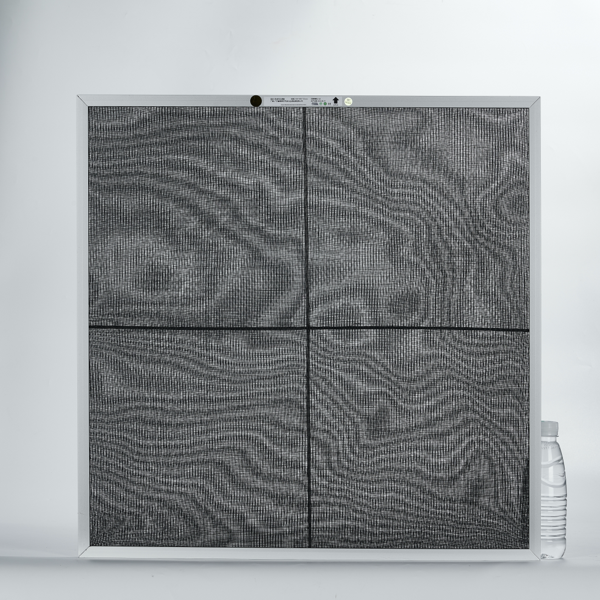
Connecting the physical properties of your materials to long-term operational outcomes represents standard engineering practice. A filter operates in dynamic environments with fluctuating temperatures and varying air pressures. The securing method must accommodate these physical realities to maintain a zero-bypass seal. Ignoring the physics of the materials guarantees premature failure in the field.
Aluminum frames and nylon mesh react differently to temperature fluctuations. Aluminum possesses a specific coefficient of thermal expansion. It expands and contracts rapidly as temperatures rise and fall. Nylon also expands, but at a different rate, and often absorbs ambient moisture, which further alters its dimensions. In a rooftop air handler, temperatures can swing from -20°C in the winter to +40°C in the summer.
If the frame expands significantly more than the mesh, the securing interface experiences extreme shear stress. The mesh tears at the spline channel or pulls away from the epoxy bond. Conversely, if the frame contracts while the mesh expands, the media loses tension and sags. Advanced engineering strategies involve pairing specific aluminum alloys, such as 6061-T6, with specialized nylon blends to closely match their thermal expansion coefficients. This minimizes stress on the securing interface during extreme temperature swings.
Aerodynamic flutter occurs when loose mesh vibrates rapidly in the airstream. This whipping motion creates micro-abrasions where the nylon contacts the inner edge of the aluminum frame. Over weeks or months, these abrasions cut through the individual nylon threads, leading to catastrophic edge failure.
Preventing flutter requires industrial stretching equipment prior to securing the mesh. Pneumatic roller frames clamp the edges of the nylon and pull it simultaneously in all four directions. This achieves a uniform, drum-tight tension across the entire surface area. Only after the mesh reaches optimal tension is it pressed into the spline channel or bonded with epoxy. Proper tensioning ensures the media remains perfectly flat, even when subjected to face velocities exceeding 500 feet per minute.
Facility managers often attempt to repair torn filters using in-house personnel. We must contrast professional pneumatic stretching with manual in-house stretching kits. Manual tools, such as squares, tape measures, and hand stretchers, allow for basic repairs. However, they rely entirely on human physical strength.
Hand stretching inevitably pulls the mesh unevenly. This creates diagonal stress wrinkles across the media face. Manual tools consistently fail to achieve the uniform, high-tolerance tension required to prevent flutter in commercial HVAC applications. Professional manufacturing facilities use tension meters to measure the exact deflection of the mesh in Newtons per centimeter. This guarantees the media remains rigid under heavy airflow.
When specifying a washable filter, you must weigh the initial manufacturing cost against the lifecycle value. A disposable filter costs less upfront but requires constant replacement. A washable panel pre filter requires a higher upfront investment due to the robust materials required. However, it significantly reduces ongoing maintenance inventory and waste disposal requirements.
The securing method directly impacts the washability of the filter. Maintenance teams clean these filters using high-pressure water hoses, compressed air, and industrial detergents. The frame-to-mesh connection must withstand this aggressive cleaning process.
Water-soluble or low-grade adhesives degrade rapidly during pressure washing. The water pressure gets underneath the adhesive bead and peels it away from the aluminum. Splines also blow out if the water jet hits the channel directly. Therefore, washable applications necessitate heavy-duty mechanical clamping, crimped edges, or marine-grade epoxies. These methods lock the mesh in place permanently, ensuring it survives repeated wash cycles without developing bypass leaks.
Moisture management serves as a critical design specification for any washable frame. Standard extruded aluminum channels often feature deep grooves. When the filter undergoes washing, water pools inside these channels. If the water cannot escape, it creates an ideal breeding ground for bacteria and mold.
To prevent moisture trapping, engineers modify the frame design. Weep holes are drilled into the bottom edge of the aluminum extrusion. This allows trapped water to drain out completely after washing. Alternatively, manufacturers use flush-edge bonding. This technique fills the entire channel with epoxy, leaving no voids for water to accumulate. Eliminating standing water prevents biological growth and stops the aluminum from oxidizing over time.
To maximize the lifespan of a washable filter, maintenance teams should follow a strict cleaning protocol:
Deploying improperly secured pre-filters introduces severe operational hazards. During the manufacturing phase, the primary risk involves hidden edge damage. During deployment, the risk shifts to handling damage. Technicians must verify structural integrity before sliding the filter into the air handling unit rack. A visual inspection of the frame perimeter remains mandatory to ensure the spline sits fully seated or the epoxy bead remains continuous.
Facility maintenance teams attempt to remesh aluminum frames on-site to save money. This introduces significant structural integrity risks. Remeshing requires professional-grade chemicals to strip old adhesives. It requires precise measuring tools to ensure the new mesh sits squarely.
Without pneumatic tension meters, in-house teams cannot verify if the mesh stretches adequately. Loose mesh leads to flutter, which leads to tearing. Furthermore, improperly seating a spline with hand tools almost guarantees corner bunching. We strongly advise against in-house remeshing for critical HVAC applications unless the team possesses proper tensioning tables and training in edge-sealing protocols.
The very act of securing the mesh can damage it. Pressing a spline into a tight aluminum groove applies immense localized pressure to the nylon threads. Mechanical crimping involves heavy metal folding over delicate fabric. Both processes risk creating micro-tears along the immediate edge of the frame.
Quality control requires rigorous inspection. We recommend optical or light-table inspections. By placing the finished filter over a bright light source, inspectors easily identify tiny edge tears or pinholes near the spline channel. Any filter exhibiting micro-tears must face rejection before deployment, as these small holes rapidly expand under static pressure.
Visual inspection alone cannot guarantee a zero-bypass seal. You must validate the performance using standardized testing protocols. Localized smoke testing proves highly effective. Technicians introduce a controlled smoke stream along the perimeter of the frame while the filter operates under static pressure. If smoke penetrates the edge seal, the securing method failed.
Pressure decay tests offer a quantifiable metric. The filter clamps into a sealed test rig, and the upstream pressure increases. Sensors monitor the downstream side for any pressure changes that indicate edge leakage. These validation steps ensure the mesh-to-frame seal remains completely airtight before the unit ever reaches the job site.
| Testing Protocol | Equipment Required | Defect Detected | Field Viability |
|---|---|---|---|
| Light Table Inspection | High-Lumen Backlight | Micro-tears, Pinholes | Low (Factory Only) |
| Localized Smoke Test | Smoke Generator, Blower | Edge Bypass, Spline Leaks | High (Can be done in-situ) |
| Pressure Decay Test | Sealed Rig, Manometer | Overall Seal Integrity | Low (Factory Only) |
| Tension Metering | Newton Tension Meter | Uneven Stretching, Sagging | Moderate (Requires tools) |
A: Preventing bypass requires a continuous edge seal. You must use either industrial-grade epoxy, a properly seated mechanical spline with exact 45-degree corner cuts to prevent bunching, or a mechanically crimped sub-frame with gasketing. Friction alone will fail under static pressure.
A: Yes, but it depends on the frame type. Spline-secured and roller-tensioned frames can be re-meshed using proper stretching kits and insertion tools. However, epoxy-bonded or mechanically crimped frames are permanent and typically require full replacement if the media tears.
A: Two-part marine-grade epoxies or industrial polyurethanes are the best choices. They offer high shear strength, exceptional moisture resistance, and enough flexibility to handle the differing thermal expansion rates of nylon and aluminum without cracking.
A: Sagging is usually attributed to improper initial tensioning during the manufacturing process. It can also result from a thermal expansion mismatch between the nylon and aluminum, or the gradual degradation and shrinkage of the securing spline or adhesive.
A: Absolutely. Mechanical crimps and chemical-resistant epoxies easily withstand high-pressure washing and chemical cleaning. Conversely, standard water-soluble glues or low-grade splines will blow out or dissolve, ruining the filter during maintenance.
